CSFs in the Context of Strategic Management
Strategic management involves three broad stages: strategy formulation, strategy implementation, and strategy evaluation. Critical Success Factors play a role in all three stages.
During strategy formulation, CSFs help managers understand what is required to compete successfully in a particular industry or market. For example, in a low-cost airline strategy, cost control, high aircraft utilization, and quick turnaround times may emerge as CSFs.
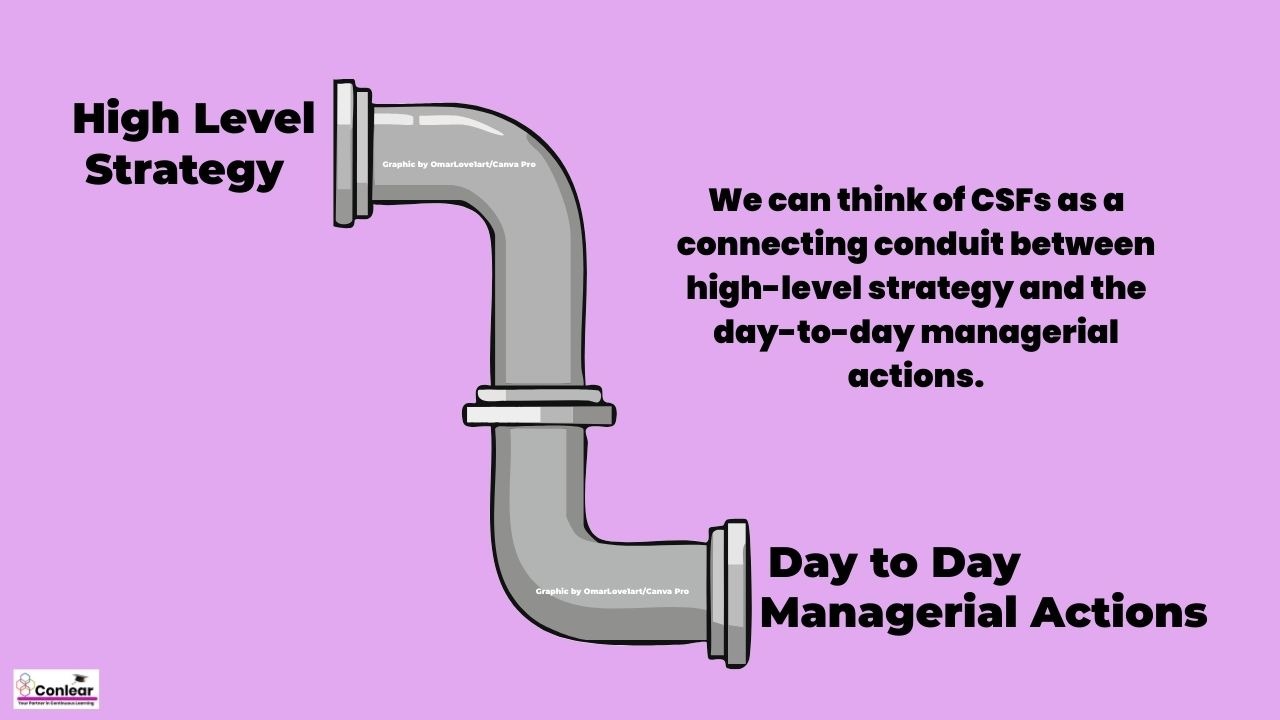
During strategy implementation, CSFs guide managerial effort and resource allocation. They translate abstract strategic goals into concrete priorities. Managers can align structures, systems, and incentives around these factors.
During strategy evaluation, CSFs help assess whether the strategy is working as intended. By monitoring performance on critical factors, managers can identify early warning signals and take corrective action.
Thus, CSFs are not an operational tool alone; they are deeply embedded in strategic thinking.


 Launch your Graphy